
So, you’re diving into the world of machining and gearing up for that practical exam? I remember the nerves; it’s a whole other ballgame compared to the theory.
From what I’ve seen and learned, getting hands-on is the only real way to prep. Knowing the tools inside and out, and being able to anticipate the small details will set you apart.
The key is to treat every practice run like the real deal, from setting up your machine to double-checking every measurement. Let’s get into the specifics and figure out how to nail this thing.
Read on to get the real scoop.
Alright, let’s get this machining exam nailed down. Here’s how we turn those nerves into knowledge and those practice runs into pure skill.
Deciphering the Blueprint: Your Map to Success
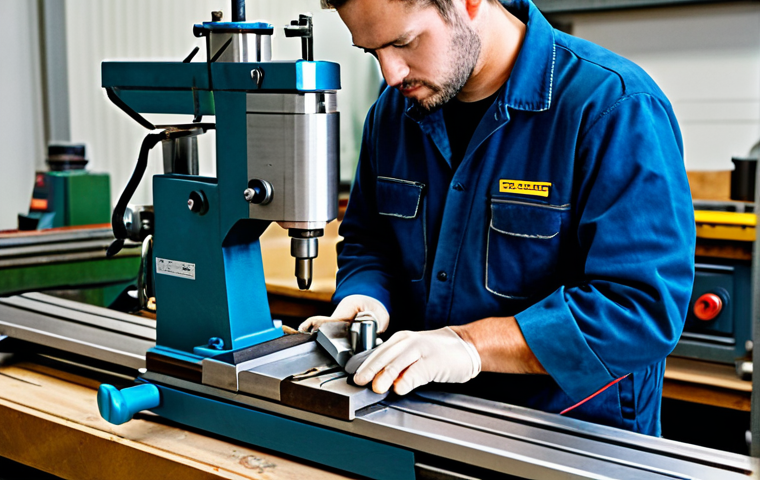
It’s one thing to glance at a blueprint; it’s another to truly *see* it. I’m talking about understanding every single line, symbol, and note as if it were a conversation.
When I was prepping, I spent hours just tracing lines with my finger, visualizing the cuts, and imagining the finished product. It’s like learning a new language, but instead of words, you’re fluent in tolerances and surface finishes.
Understanding Tolerances: The Margin for Error
You can’t just eyeball it. You need to know exactly how much leeway you have, and that’s where tolerances come in. Knowing the difference between unilateral and bilateral tolerances can be the difference between a pass and a fail.
I recall one time, I was off by just 0.002 inches because I hadn’t properly accounted for the tolerance on a diameter. It was a painful lesson, but it stuck with me.
Always double-check those numbers!
Visualizing the Final Product: From 2D to 3D
This is where your spatial reasoning comes into play. Can you mentally rotate the part and see it from all angles? Can you picture the steps involved in creating each feature?
If not, start practicing! Grab some scrap material and try to machine simple shapes based on blueprints. The more you do it, the easier it becomes to translate those 2D drawings into 3D reality.
Decoding Symbols and Notes: Beyond the Lines
Don’t overlook those little symbols and notes scattered around the blueprint. They often contain crucial information about surface finishes, heat treatments, or other special requirements.
I made the mistake of ignoring a note about a specific deburring process once, and it cost me valuable time during the exam. Now, I treat every symbol and note as a potential gotcha, and I make sure I understand it completely before I even touch the material.
Tooling Up: Knowing Your Arsenal
Walking into the shop with a confident grasp of each tool can dramatically shift your performance. It’s not just about knowing the name, but the feel, the sound, and the quirks of each piece.
Mastering the Micrometer: Precision in Your Hands
I can’t stress this enough: get comfortable with your micrometer. Practice reading it in different lighting conditions, with different materials, and with different amounts of pressure.
I used to carry a small piece of metal around with me and practice measuring it whenever I had a spare moment. The goal is to develop a feel for it so that you can get accurate readings quickly and consistently.
Dial Calipers: The Versatile Workhorse
While micrometers are great for precision, dial calipers are your go-to for general measurements. They’re quick, versatile, and relatively easy to use.
But don’t let their simplicity fool you; they can still be a source of error if you’re not careful. Make sure you zero them properly, apply consistent pressure, and read the dial accurately.
The Right Tool for the Right Job: Selection and Application
Knowing which tool to use for a particular task is crucial. For example, you wouldn’t use a roughing end mill for finishing cuts, or a center drill for drilling deep holes.
It’s all about understanding the strengths and limitations of each tool and choosing the one that will give you the best results. When I was learning, I created a cheat sheet with all the different tools and their applications.
It helped me visualize the entire machining process and make better decisions on the fly.
Machine Setup: Laying the Foundation for Success
The way you set up your machine is paramount. An unsteady setup will lead to chatter, inaccurate cuts, and a whole lot of frustration. This part is all about precision and meticulousness.
Work Holding: Secure and Stable
This is where a lot of people mess up. If your workpiece isn’t held securely, it can vibrate, shift, or even fly out of the machine. Make sure you choose the right work-holding device for the job, whether it’s a vise, a chuck, or a fixture.
And always double-check that everything is tightened down properly before you start machining.
Alignment and Tramming: Ensuring Accuracy
If your machine isn’t properly aligned, you’re going to have a hard time getting accurate cuts. This is especially important for milling machines, where the spindle needs to be perpendicular to the table.
Tramming the head is a skill that takes practice, but it’s well worth the effort. I remember spending hours adjusting the tram until it was perfect. It was tedious, but it paid off in the end.
Speed and Feed: Finding the Sweet Spot
Choosing the right speed and feed is crucial for achieving good surface finishes, minimizing tool wear, and preventing chatter. There’s no one-size-fits-all answer, as it depends on the material, the tool, and the machine.
But there are some general guidelines you can follow. Start with the manufacturer’s recommendations and then adjust from there based on your observations.
Listen to the sound of the machine, watch the chips being produced, and feel for any vibrations. The goal is to find the sweet spot where the machine is cutting smoothly and efficiently.
Cutting Techniques: Precision in Motion
Mastering different cutting techniques can make or break your exam. It’s about finesse as much as it is about power. Each technique demands a specific approach and understanding.
Roughing vs. Finishing: Strategizing Your Cuts
Don’t try to remove all the material in one pass. Instead, break it down into roughing and finishing cuts. Roughing cuts are for removing large amounts of material quickly, while finishing cuts are for achieving the final dimensions and surface finish.
Using this approach will not only save you time but also reduce the risk of tool breakage and workpiece distortion.
Conventional vs. Climb Milling: Choosing the Right Direction
The direction you feed the tool into the material can have a significant impact on the cutting process. Conventional milling is where the tool cuts against the direction of feed, while climb milling is where the tool cuts in the same direction as the feed.
Each has its advantages and disadvantages. Conventional milling is better for roughing cuts and for materials that are prone to work hardening, while climb milling is better for finishing cuts and for achieving better surface finishes.
Dealing with Chatter: Taming the Vibrations
Chatter is the bane of every machinist’s existence. It’s a vibration that occurs when the tool, the workpiece, or the machine is not rigid enough. It can ruin your surface finish, damage your tool, and even break your machine.
There are several things you can do to minimize chatter, such as reducing the cutting speed, increasing the feed rate, using a shorter tool, or adding more support to the workpiece.
Material Mastery: Knowing Your Metals
Understanding the properties of different materials is key to a successful machining process. Some materials cut like butter, while others are a nightmare.
Steel: The Versatile Workhorse
Steel is the most common material you’ll encounter in machining. It’s strong, durable, and relatively easy to machine. However, there are many different types of steel, each with its own unique properties.
Some steels are harder than others, some are more ductile, and some are more prone to work hardening. Knowing the type of steel you’re working with is crucial for choosing the right cutting parameters and techniques.
Aluminum: Lightweight and Machinable
Aluminum is another popular material in machining. It’s lightweight, corrosion-resistant, and easy to machine. However, it can also be challenging to work with due to its tendency to stick to the cutting tool.
Using sharp tools, high cutting speeds, and plenty of coolant can help minimize this problem.
Exotic Alloys: Taming the Unconventional
Sometimes you’ll have to machine materials that are not so common, such as titanium, Inconel, or Hastelloy. These materials are known as exotic alloys because they have unique properties that make them difficult to machine.
They’re often very hard, very strong, and very resistant to heat and corrosion. Machining these materials requires specialized tools, techniques, and cutting parameters.
Quality Control: Ensuring Perfection
The only way to know if you’ve done a good job is to measure your work. This is where quality control comes in.
Inspection Techniques: Spotting Deviations
Knowing how to properly inspect your parts can make or break your project. This involves using the right tools, understanding the specifications, and being meticulous in your approach.
It’s not just about finding errors; it’s about preventing them in the first place. I always say, “Measure twice, cut once!”
Surface Finish: The Devil in the Details
The surface finish of your part is not just about aesthetics; it’s also about functionality. A rough surface finish can cause premature wear, reduce fatigue strength, and increase friction.
Knowing how to measure and control surface finish is crucial for ensuring the quality and performance of your parts. Here is a quick guide:
| Material | Cutting Speed (SFM) | Feed Rate (IPR) | Coolant |
|---|---|---|---|
| Mild Steel | 100-150 | 0.005-0.010 | Yes |
| Aluminum | 300-500 | 0.010-0.015 | Yes |
| Stainless Steel | 50-80 | 0.003-0.008 | Yes |
Remember, this table is a starting point. Always consult the material manufacturer’s recommendations and adjust the cutting parameters based on your observations.
Troubleshooting: Solving Problems on the Fly
No matter how well you prepare, things can still go wrong during the exam. The key is to stay calm, think logically, and use your knowledge to solve the problem.
Identifying Common Issues: A Checklist
Before diving into solutions, take a moment to identify what’s actually going wrong. Is there chatter? Are the dimensions off?
By systematically checking the common problem areas, you’ll be able to pinpoint the issue and develop an effective solution. * Chatter: Likely due to excessive speed or inadequate work holding.
* Poor Surface Finish: Possibly due to incorrect feed rate or dull tools. * Dimensional Errors: Could be due to improper measurements or machine misalignment.
Implementing Solutions: Quick Fixes That Work
Once you’ve identified the problem, it’s time to take action. Start with the simplest solutions first and work your way up to the more complex ones. And don’t be afraid to ask for help if you’re stuck.
* Adjusting Cutting Parameters: Reduce the speed or increase the feed. * Tightening Work Holding: Ensure everything is secured properly. * Changing Tools: Use sharper or more appropriate tools.
By following these tips, you’ll be well-prepared to tackle any machining exam. Good luck! Alright, let’s get this machining exam nailed down.
Here’s how we turn those nerves into knowledge and those practice runs into pure skill.
Deciphering the Blueprint: Your Map to Success
It’s one thing to glance at a blueprint; it’s another to truly *see* it. I’m talking about understanding every single line, symbol, and note as if it were a conversation. When I was prepping, I spent hours just tracing lines with my finger, visualizing the cuts, and imagining the finished product. It’s like learning a new language, but instead of words, you’re fluent in tolerances and surface finishes.
Understanding Tolerances: The Margin for Error
You can’t just eyeball it. You need to know exactly how much leeway you have, and that’s where tolerances come in. Knowing the difference between unilateral and bilateral tolerances can be the difference between a pass and a fail. I recall one time, I was off by just 0.002 inches because I hadn’t properly accounted for the tolerance on a diameter. It was a painful lesson, but it stuck with me. Always double-check those numbers!
Visualizing the Final Product: From 2D to 3D

This is where your spatial reasoning comes into play. Can you mentally rotate the part and see it from all angles? Can you picture the steps involved in creating each feature? If not, start practicing! Grab some scrap material and try to machine simple shapes based on blueprints. The more you do it, the easier it becomes to translate those 2D drawings into 3D reality.
Decoding Symbols and Notes: Beyond the Lines
Don’t overlook those little symbols and notes scattered around the blueprint. They often contain crucial information about surface finishes, heat treatments, or other special requirements. I made the mistake of ignoring a note about a specific deburring process once, and it cost me valuable time during the exam. Now, I treat every symbol and note as a potential gotcha, and I make sure I understand it completely before I even touch the material.
Tooling Up: Knowing Your Arsenal
Walking into the shop with a confident grasp of each tool can dramatically shift your performance. It’s not just about knowing the name, but the feel, the sound, and the quirks of each piece.
Mastering the Micrometer: Precision in Your Hands
I can’t stress this enough: get comfortable with your micrometer. Practice reading it in different lighting conditions, with different materials, and with different amounts of pressure. I used to carry a small piece of metal around with me and practice measuring it whenever I had a spare moment. The goal is to develop a feel for it so that you can get accurate readings quickly and consistently.
Dial Calipers: The Versatile Workhorse
While micrometers are great for precision, dial calipers are your go-to for general measurements. They’re quick, versatile, and relatively easy to use. But don’t let their simplicity fool you; they can still be a source of error if you’re not careful. Make sure you zero them properly, apply consistent pressure, and read the dial accurately.
The Right Tool for the Right Job: Selection and Application
Knowing which tool to use for a particular task is crucial. For example, you wouldn’t use a roughing end mill for finishing cuts, or a center drill for drilling deep holes. It’s all about understanding the strengths and limitations of each tool and choosing the one that will give you the best results. When I was learning, I created a cheat sheet with all the different tools and their applications. It helped me visualize the entire machining process and make better decisions on the fly.
Machine Setup: Laying the Foundation for Success
The way you set up your machine is paramount. An unsteady setup will lead to chatter, inaccurate cuts, and a whole lot of frustration. This part is all about precision and meticulousness.
Work Holding: Secure and Stable
This is where a lot of people mess up. If your workpiece isn’t held securely, it can vibrate, shift, or even fly out of the machine. Make sure you choose the right work-holding device for the job, whether it’s a vise, a chuck, or a fixture. And always double-check that everything is tightened down properly before you start machining.
Alignment and Tramming: Ensuring Accuracy
If your machine isn’t properly aligned, you’re going to have a hard time getting accurate cuts. This is especially important for milling machines, where the spindle needs to be perpendicular to the table. Tramming the head is a skill that takes practice, but it’s well worth the effort. I remember spending hours adjusting the tram until it was perfect. It was tedious, but it paid off in the end.
Speed and Feed: Finding the Sweet Spot
Choosing the right speed and feed is crucial for achieving good surface finishes, minimizing tool wear, and preventing chatter. There’s no one-size-fits-all answer, as it depends on the material, the tool, and the machine. But there are some general guidelines you can follow. Start with the manufacturer’s recommendations and then adjust from there based on your observations. Listen to the sound of the machine, watch the chips being produced, and feel for any vibrations. The goal is to find the sweet spot where the machine is cutting smoothly and efficiently.
Cutting Techniques: Precision in Motion
Mastering different cutting techniques can make or break your exam. It’s about finesse as much as it is about power. Each technique demands a specific approach and understanding.
Roughing vs. Finishing: Strategizing Your Cuts
Don’t try to remove all the material in one pass. Instead, break it down into roughing and finishing cuts. Roughing cuts are for removing large amounts of material quickly, while finishing cuts are for achieving the final dimensions and surface finish. Using this approach will not only save you time but also reduce the risk of tool breakage and workpiece distortion.
Conventional vs. Climb Milling: Choosing the Right Direction
The direction you feed the tool into the material can have a significant impact on the cutting process. Conventional milling is where the tool cuts against the direction of feed, while climb milling is where the tool cuts in the same direction as the feed. Each has its advantages and disadvantages. Conventional milling is better for roughing cuts and for materials that are prone to work hardening, while climb milling is better for finishing cuts and for achieving better surface finishes.
Dealing with Chatter: Taming the Vibrations
Chatter is the bane of every machinist’s existence. It’s a vibration that occurs when the tool, the workpiece, or the machine is not rigid enough. It can ruin your surface finish, damage your tool, and even break your machine. There are several things you can do to minimize chatter, such as reducing the cutting speed, increasing the feed rate, using a shorter tool, or adding more support to the workpiece.
Material Mastery: Knowing Your Metals
Understanding the properties of different materials is key to a successful machining process. Some materials cut like butter, while others are a nightmare.
Steel: The Versatile Workhorse
Steel is the most common material you’ll encounter in machining. It’s strong, durable, and relatively easy to machine. However, there are many different types of steel, each with its own unique properties. Some steels are harder than others, some are more ductile, and some are more prone to work hardening. Knowing the type of steel you’re working with is crucial for choosing the right cutting parameters and techniques.
Aluminum: Lightweight and Machinable
Aluminum is another popular material in machining. It’s lightweight, corrosion-resistant, and easy to machine. However, it can also be challenging to work with due to its tendency to stick to the cutting tool. Using sharp tools, high cutting speeds, and plenty of coolant can help minimize this problem.
Exotic Alloys: Taming the Unconventional
Sometimes you’ll have to machine materials that are not so common, such as titanium, Inconel, or Hastelloy. These materials are known as exotic alloys because they have unique properties that make them difficult to machine. They’re often very hard, very strong, and very resistant to heat and corrosion. Machining these materials requires specialized tools, techniques, and cutting parameters.
Quality Control: Ensuring Perfection
The only way to know if you’ve done a good job is to measure your work. This is where quality control comes in.
Inspection Techniques: Spotting Deviations
Knowing how to properly inspect your parts can make or break your project. This involves using the right tools, understanding the specifications, and being meticulous in your approach. It’s not just about finding errors; it’s about preventing them in the first place. I always say, “Measure twice, cut once!”
Surface Finish: The Devil in the Details
The surface finish of your part is not just about aesthetics; it’s also about functionality. A rough surface finish can cause premature wear, reduce fatigue strength, and increase friction. Knowing how to measure and control surface finish is crucial for ensuring the quality and performance of your parts.
Here is a quick guide:
| Material | Cutting Speed (SFM) | Feed Rate (IPR) | Coolant |
|---|---|---|---|
| Mild Steel | 100-150 | 0.005-0.010 | Yes |
| Aluminum | 300-500 | 0.010-0.015 | Yes |
| Stainless Steel | 50-80 | 0.003-0.008 | Yes |
Remember, this table is a starting point. Always consult the material manufacturer’s recommendations and adjust the cutting parameters based on your observations.
Troubleshooting: Solving Problems on the Fly
No matter how well you prepare, things can still go wrong during the exam. The key is to stay calm, think logically, and use your knowledge to solve the problem.
Identifying Common Issues: A Checklist
Before diving into solutions, take a moment to identify what’s actually going wrong. Is there chatter? Are the dimensions off? By systematically checking the common problem areas, you’ll be able to pinpoint the issue and develop an effective solution.
- Chatter: Likely due to excessive speed or inadequate work holding.
- Poor Surface Finish: Possibly due to incorrect feed rate or dull tools.
- Dimensional Errors: Could be due to improper measurements or machine misalignment.
Implementing Solutions: Quick Fixes That Work
Once you’ve identified the problem, it’s time to take action. Start with the simplest solutions first and work your way up to the more complex ones. And don’t be afraid to ask for help if you’re stuck.
- Adjusting Cutting Parameters: Reduce the speed or increase the feed.
- Tightening Work Holding: Ensure everything is secured properly.
- Changing Tools: Use sharper or more appropriate tools.
By following these tips, you’ll be well-prepared to tackle any machining exam. Good luck!
Wrapping Up
So, there you have it – a comprehensive guide to acing your machining exam. Remember, preparation is key, but so is staying calm and thinking on your feet. Trust your skills, stay focused, and you’ll be well on your way to success.
Useful Information
1. Check out local trade schools and community colleges for machining workshops and courses. These can provide hands-on experience and valuable insights from industry professionals.
2. Join online forums and communities dedicated to machining. Platforms like Practical Machinist or Reddit’s r/machinists are great for asking questions, sharing tips, and learning from others.
3. Invest in a good set of measuring tools, such as a digital caliper and micrometer. Accurate measurements are crucial in machining, so having reliable tools is essential.
4. Consider purchasing a used desktop CNC machine for home practice. This allows you to experiment with different machining techniques and materials in a low-stakes environment.
5. Look for local manufacturers or machine shops that offer internships or apprenticeships. Gaining real-world experience in a professional setting can greatly enhance your skills and knowledge.
Key Takeaways
Blueprint reading is fundamental; know your tolerances and symbols.
Tool familiarity is crucial; practice with micrometers and calipers until they feel like extensions of your hands.
Machine setup is paramount; secure work holding and accurate alignment prevent errors.
Master various cutting techniques and understand material properties to optimize performance.
Quality control is non-negotiable; measure and inspect your work to ensure perfection.
Frequently Asked Questions (FAQ) 📖
Q: I’m absolutely clueless about setting up the machine.
A: ny insider tips to avoid looking like a complete newbie during the exam? A1: Okay, so picture this: you stroll up to the machine, not fumbling with your tools, but with a calm, collected swagger.
First, before you even touch the metal, double-check your blueprints and make sure you understand the specific requirements. Then, make sure your work area is clean and organized.
Trust me, a tidy workspace is a clear mind. Next, carefully clamp your workpiece. Wobbly material is a recipe for disaster.
Use shims if you need to ensure a flush, secure fit. The setup is half the battle. Remember, precision trumps speed every time.
I had a professor who always said, “Measure twice, cut once. And then, measure again just to be sure.” Don’t be afraid to use your indicators and measuring tools meticulously.
It’s way better to take a moment and get it right than to rush and waste precious material, and more importantly, time during the exam.
Q: I always get tripped up on tolerances. What’s the best way to ensure I’m within spec on my cuts?
A: Ah, tolerances! The bane of every machinist’s existence, right? Well, here’s my two cents: creep up on your final dimensions.
I mean it. Aim slightly above your target, then take super light finishing passes until you hit that sweet spot. Forget trying to hog off material in one go; that’s a surefire path to undersized parts and major frustration.
For example, if you need to hit 1.000 inch, aim for 1.005, then take off a thou or two at a time. Also, calibrate your measuring instruments before you start.
A micrometer that’s off by a hair can make or break you. And keep the instruments clean. Grime and chips can throw your measurements off by a mile.
Also, don’t just trust the digital readout on the machine blindly. Always double-check your cuts with hand tools. Finally, document your measurements as you go.
It’s easier to catch a mistake early on than to discover you’re out of spec at the very end.
Q: During practice, I keep getting chatter and poor surface finishes. How do I fix this before the exam?
A: Ugh, chatter…the sound that strikes fear into every machinist’s heart! Nine times out of ten, chatter comes down to a few key things: rigidity, speeds/feeds, and tool sharpness.
First, make sure your workpiece is secured like Fort Knox. Any vibration will amplify, causing that horrible chatter. Reduce your spindle speed and feed rate.
Sometimes slowing things down actually speeds up the process by eliminating the chatter and giving you a cleaner cut. Also, ensure that your cutting tools are razor sharp.
A dull tool forces the material to tear rather than cut cleanly. If you are using inserts, check and make sure that it is not worn and seated correctly.
Also, check your machine for wear and tear. If possible, try using a different machine and compare it to what you were initially using. Also, consider the tooling you are using.
If possible, use tools with vibration dampening technology or use a different type of cutter. A tiny bit of experimentation can make a world of difference.
📚 References
Wikipedia Encyclopedia
구글 검색 결과
구글 검색 결과
구글 검색 결과
구글 검색 결과
구글 검색 결과