Hey everyone! As someone deeply passionate about how things are made, I’m constantly buzzing with excitement over the incredible evolution happening in machine processing.
It truly feels like every day brings a new breakthrough, transforming what we once thought possible in manufacturing. From the sophisticated dance of advanced robotics and automation that are making production lines smarter and faster than ever, to the game-changing power of Artificial Intelligence optimizing everything from design to predictive maintenance, the landscape is simply electrifying.
I’ve personally seen how understanding these core subjects isn’t just academic; it’s about getting a front-row seat to the future. We’re talking about everything from the magic of additive manufacturing, creating complex parts with unparalleled precision, to the drive towards sustainable practices that are reshaping our environmental impact.
It’s an exhilarating blend of innovation, efficiency, and real-world impact that demands our attention. These aren’t just abstract concepts; they’re tangible advancements that affect industries globally and impact our daily lives.
If you’re eager to unlock the secrets behind these cutting-edge technologies and truly grasp the vital subjects propelling this industrial revolution forward, let’s dive in deeper below!
Hello there, fellow innovation enthusiasts! It’s truly a wild ride, isn’t it? As someone who’s practically lived and breathed the factory floor and spent countless hours poring over the latest advancements, I’m absolutely thrilled to share what I’ve learned and seen firsthand.
The world of machine processing is evolving at a breathtaking pace, and honestly, it’s not just about bigger, faster machines anymore. It’s about a complete paradigm shift, fundamentally changing how we create, innovate, and even think about what’s possible.
From the tiniest micro-components to massive industrial structures, the underlying technologies are simply fascinating, and they’re reshaping industries from aerospace to consumer goods right before our eyes.
Let’s dive into some of the pivotal areas that are really making waves.
Embracing the Era of Advanced Robotics and Automation
The transformation I’ve witnessed in robotics over the past decade is nothing short of revolutionary. It’s no longer about clunky, caged-off behemoths performing repetitive tasks.
We’re talking about incredibly nimble, intelligent, and often collaborative robots – or “cobots” – that are literally changing the game on the shop floor.
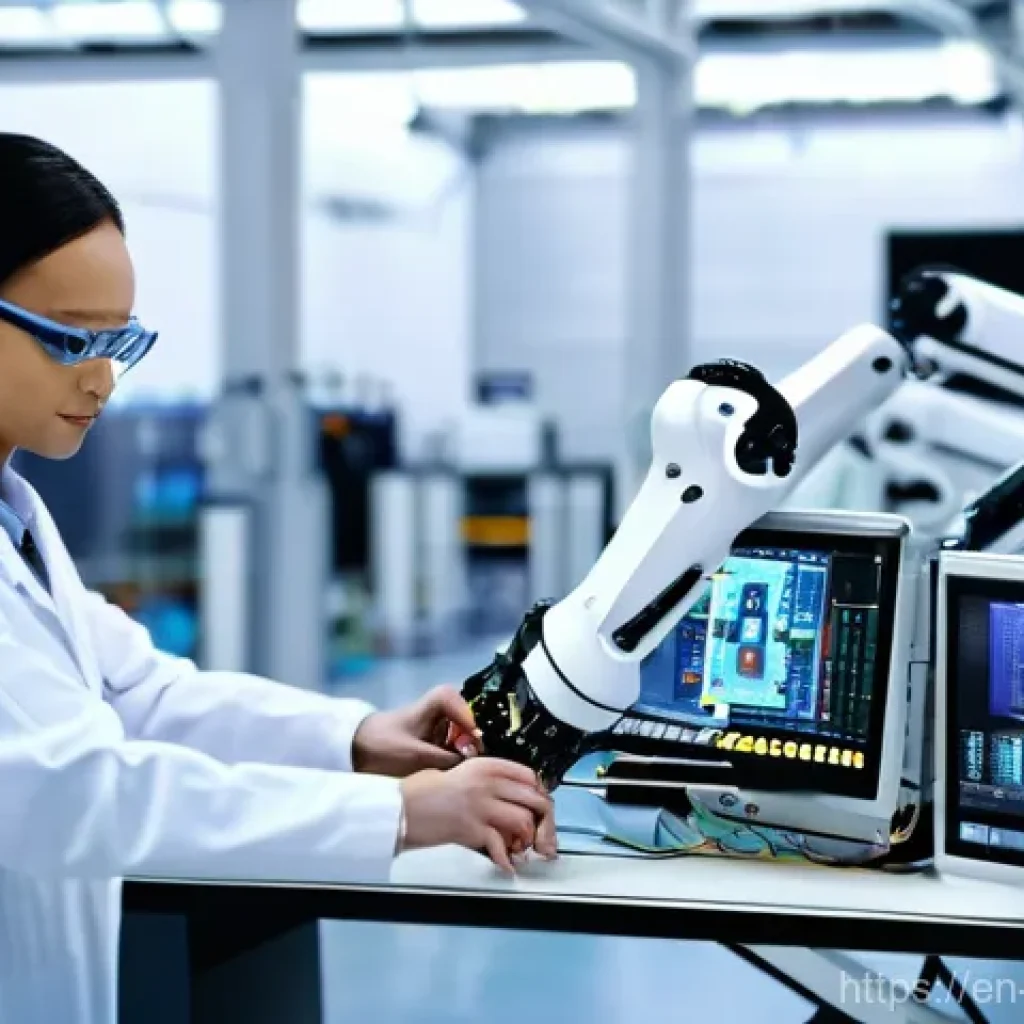
I recall visiting a specialized electronics manufacturing plant where a team of cobots worked seamlessly alongside human technicians, handling delicate component placement with precision that even the steadiest human hand would struggle to maintain consistently for hours.
It was genuinely mind-blowing to see how these machines could adapt to minor variations, learn new tasks with relative ease, and even anticipate potential issues, all while maintaining an incredible pace.
This isn’t just about speed; it’s about unparalleled accuracy, reduced waste, and the ability to free up human workers for more complex, creative, and value-added roles.
The Rise of Collaborative Robotics
In my experience, collaborative robots have been one of the biggest disruptors. Forget the old image of robots as job-stealers; these new-generation machines are true partners.
They’re equipped with advanced sensors that allow them to work safely alongside people, sensing proximity and reacting instantly to prevent collisions.
I’ve seen small and medium-sized businesses (SMBs) in the Midwest, once hesitant to invest in automation, now thriving by integrating cobots for tasks like assembly, packaging, and quality inspection.
This shift has allowed them to scale production, improve consistency, and compete more effectively globally, without needing to completely re-engineer their entire facility.
It feels like we’re just scratching the surface of what human-robot teams can achieve together.
Intelligent Automation Beyond the Production Line
And it’s not just the physical robots making a difference. Intelligent automation extends far beyond the production line into areas like logistics and material handling.
I’ve walked through warehouses where autonomous mobile robots (AMRs) navigate complex environments, moving inventory and materials exactly where they need to be, optimizing flow, and drastically reducing the time it takes to fulfill orders.
This level of efficiency, driven by sophisticated algorithms and real-time data, means faster delivery for us consumers and significant cost savings for businesses.
It really underscores how smart machines are now orchestrating entire operational ecosystems, not just isolated processes.
The Game-Changing Power of Artificial Intelligence in Manufacturing
If robotics is the muscle, then Artificial Intelligence is definitely the brain behind modern manufacturing. I’ve personally seen how AI is moving from being a futuristic concept to a pragmatic, indispensable tool that optimizes virtually every facet of the production lifecycle.
My early encounters with AI in manufacturing felt a bit experimental, but now, it’s integrated, robust, and delivering tangible results that directly impact the bottom line.
From predicting equipment failures before they happen, saving companies millions in downtime, to fine-tuning product designs for optimal performance and material usage, AI’s analytical prowess is truly unparalleled.
It’s like having an army of super-intelligent engineers constantly working to improve every process imaginable.
Predictive Maintenance: AI’s Crystal Ball for Machinery
One area where AI has absolutely shone is in predictive maintenance. I recall a friend, who runs a precision parts manufacturing company, telling me how they used to schedule downtime for maintenance based on fixed intervals, often replacing parts that still had plenty of life left or, worse, having unexpected breakdowns that halted production for days.
After implementing an AI-driven system that analyzes sensor data from their machines in real-time – monitoring vibrations, temperature, power consumption – they saw a dramatic reduction in unplanned downtime.
The AI could literally “hear” and “feel” the subtle signs of impending failure long before any human could, allowing them to schedule maintenance precisely when needed.
It’s like having a mechanic who knows exactly when your car is about to have a problem, even before the check engine light comes on!
Optimizing Design and Processes with Machine Learning
Beyond maintenance, AI, particularly machine learning, is revolutionizing how products are designed and processes are optimized. I’ve been fascinated by generative design, where engineers input parameters and AI algorithms generate thousands of potential design solutions, many of which human designers might never conceive.
These designs are often lighter, stronger, and use less material, pushing the boundaries of what’s structurally possible. On the process side, AI can analyze vast datasets from production runs to identify inefficiencies, suggest adjustments to machine parameters, or even reconfigure entire workflows to boost output and quality.
It’s incredibly powerful to see algorithms uncover hidden patterns and offer insights that lead to significant improvements in efficiency and cost-effectiveness.
Unlocking Possibilities with Additive Manufacturing
Additive manufacturing, or 3D printing as many of us know it, has utterly captivated me since its early days. What started as a rapid prototyping tool has blossomed into a full-fledged production method, capable of creating incredibly complex and bespoke parts that were once impossible or prohibitively expensive to produce with traditional methods.
I’ve held aerospace components in my hand that are lighter and stronger than their conventionally manufactured counterparts, all thanks to the layer-by-layer precision of 3D printing.
It’s not just a fancy way to make plastic trinkets anymore; it’s a profound shift in how we think about design, material science, and supply chains.
Complex Geometries and Customization
The ability to produce parts with intricate internal structures and highly customized geometries is where additive manufacturing truly shines. I’ve spoken with medical professionals who are now using 3D printing to create patient-specific implants and prosthetics, perfectly tailored to an individual’s anatomy, leading to better outcomes and faster recovery times.
Imagine a world where a broken bone means a custom-fitted brace printed on demand, rather than a generic cast. This level of customization and complexity is revolutionizing fields that demand absolute precision and unique solutions, making previously impossible feats a daily reality.
Material Innovation and Supply Chain Resilience
Beyond shape, additive manufacturing is pushing the boundaries of material science. We’re seeing everything from high-performance metals and ceramics to advanced polymers being used to print functional components.
This isn’t just about printing; it’s about creating new material properties through controlled layering. What’s more, it’s fundamentally reshaping supply chains.
Instead of shipping parts across oceans, companies can now print components closer to the point of need, reducing lead times, transportation costs, and their carbon footprint.
I truly believe this localized, on-demand production model offers incredible resilience against global disruptions, something we’ve all come to appreciate more recently.
Driving Towards Sustainable and Circular Manufacturing
It’s no secret that the manufacturing industry has historically had a significant environmental footprint. However, what excites me immensely now is the concerted effort and tangible progress being made towards sustainable and circular manufacturing practices.
This isn’t just about being “green” for show; it’s about deeply embedding environmental responsibility into every stage of production, from raw material sourcing to end-of-life product management.
I’ve seen firsthand how companies are realizing that sustainability isn’t just a cost center, but a powerful driver for innovation, efficiency, and long-term profitability.
It feels like a genuine turning point for the industry.
Reducing Waste and Energy Consumption
One of the most immediate impacts I’ve observed is the incredible focus on waste reduction. Through advanced process optimization, often powered by AI, manufacturers are minimizing material scrap rates and optimizing energy consumption.
For instance, I recently visited a facility that has implemented a closed-loop system for their cooling water, drastically reducing water usage and discharge.
Similarly, switching to more efficient machinery, powered by renewable energy sources, is becoming a standard practice. These changes, while sometimes requiring initial investment, quickly pay dividends in reduced operational costs and a much lighter environmental impact.
It’s a win-win that makes perfect business sense.
Embracing Circular Economy Principles
Beyond just reducing waste, the concept of a circular economy is gaining serious traction. This means designing products not just for use, but also for disassembly, reuse, and recycling.
I’ve seen some brilliant examples where manufacturers are taking back their old products, refurbishing them, or recovering valuable materials for new production cycles.
This approach transforms waste into a resource, reducing reliance on virgin materials and minimizing landfill waste. It’s a holistic view that challenges the traditional linear “take, make, dispose” model, and frankly, it’s the future we need for our planet.
The Digital Twin: A Virtual Mirror for Real-World Gains
Stepping into the realm of the digital twin always feels a bit like science fiction becoming reality, and it’s absolutely brilliant. For those unfamiliar, a digital twin is essentially a virtual replica of a physical asset, process, or system.
It’s constantly updated with real-time data from its physical counterpart, allowing engineers and managers to monitor, analyze, and even simulate its behavior without ever touching the actual thing.
I’ve personally seen how this technology provides an unprecedented level of insight, transforming decision-making and problem-solving across various industries.
It’s like having a perfectly synchronized, highly intelligent shadow of your operations.
Real-Time Monitoring and Optimization
The immediate benefit of a digital twin, in my experience, is the ability to monitor complex systems in real-time. Imagine a massive wind turbine or an entire factory floor, all digitally replicated.
Sensors on the physical assets feed data back to the digital twin, allowing operators to see exactly what’s happening at any given moment. This means issues can be identified and addressed immediately, often before they escalate into major problems.
I’ve heard countless stories of companies using digital twins to optimize energy usage, fine-tune machine parameters, and even predict maintenance needs with incredible accuracy, all leading to significant operational savings.
It’s truly a game-changer for proactive management.
Simulation and Predictive Analysis
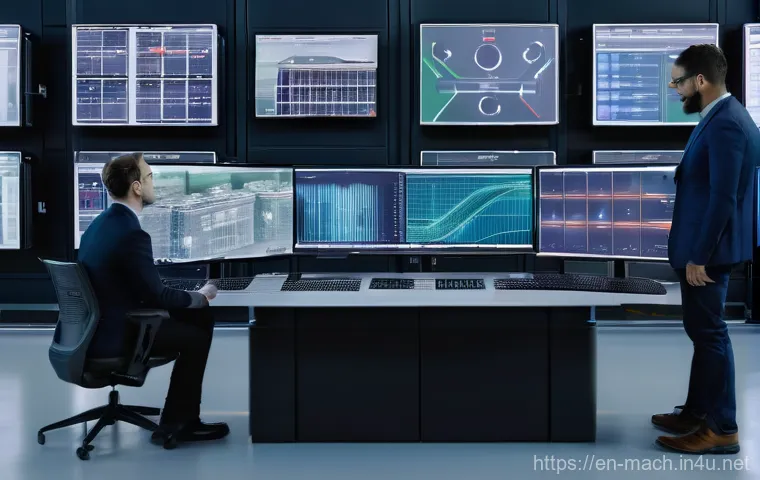
Where digital twins truly dazzle is in their simulation capabilities. Because you have a perfect, data-rich replica, you can run “what-if” scenarios without any risk to the physical system.
Want to test a new production layout? Simulate it on the digital twin. Curious how a change in material might affect performance?
Model it. This predictive analysis allows engineers to optimize designs, test new processes, and even train personnel in a virtual environment. It dramatically reduces the time and cost associated with physical prototyping and experimentation, accelerating innovation at an incredible pace.
It feels like having a crystal ball, but one that’s based on hard data and advanced physics!
Human-Robot Collaboration: The Synergy of Minds and Machines
When I first heard about robots working alongside humans, my initial thought was of safety concerns and potential job displacement. However, having seen it in action, I’m absolutely convinced that human-robot collaboration, or “cobotics,” is creating an entirely new paradigm for the workforce.
It’s not about replacing people; it’s about augmenting human capabilities, offloading mundane or dangerous tasks to machines, and freeing up human ingenuity for more complex, creative, and strategic roles.
This synergy, to me, is one of the most exciting developments in modern manufacturing.
Enhancing Productivity and Safety
I’ve witnessed cobots working hand-in-hand with assembly line workers, carefully lifting heavy components, holding parts steady for precision work, or performing repetitive tasks that can lead to strain injuries over time.
The result? A significant boost in productivity, as humans can focus on intricate detailing and quality control while the cobot handles the brute force or monotonous repetition.
More importantly, it dramatically enhances workplace safety. Cobots are designed with advanced sensors and safety features, meaning they stop or slow down if a human comes too close.
This allows for a much more integrated workspace without the need for traditional safety cages, which used to separate humans and machines entirely.
Upskilling the Workforce for a New Era
This shift isn’t just about the robots; it’s about the evolution of human roles. I’ve noticed a strong trend towards upskilling the workforce, with operators learning how to program, monitor, and troubleshoot these collaborative robots.
This creates new, more engaging job opportunities that require problem-solving and technical skills, moving away from purely manual labor. It’s genuinely inspiring to see individuals who might have previously performed physically demanding tasks now becoming “robot whisperers,” learning to optimize their automated partners.
This human-robot team approach truly maximizes the strengths of both, leading to more efficient, innovative, and safer manufacturing environments.
| Aspect | Traditional Manufacturing | Modern AI/Robotics-Driven Manufacturing |
|---|---|---|
| Production Speed | Often slower, limited by manual input and older machinery. | Significantly faster, optimized by automation and continuous operation. |
| Flexibility | Less adaptable to sudden changes in product design or demand. | Highly adaptable, capable of rapid retooling and customized runs. |
| Accuracy/Precision | Varies with human skill; susceptible to fatigue and error. | Consistent high precision, near-perfect repeatability. |
| Waste Generation | Higher material scrap rates, less efficient energy use. | Reduced waste through optimization, efficient resource utilization. |
| Maintenance | Reactive or time-based; prone to unexpected breakdowns. | Predictive maintenance; minimized downtime, extended machine life. |
| Workforce Role | Manual labor, repetitive tasks, direct machine operation. | Supervision, programming, problem-solving, strategic planning. |
| Data Utilization | Limited data collection, often manual analysis. | Extensive real-time data collection, AI-driven analytics for insights. |
Advanced Materials: Pushing the Boundaries of Performance
As someone who’s always been fascinated by what things are made of, the innovations happening in advanced materials are truly mind-bending. It’s not just about using stronger metals or lighter plastics anymore; it’s about engineering materials at a fundamental level to exhibit properties that were once unimaginable.
These breakthroughs are absolutely critical because they’re enabling the creation of entirely new products and pushing the performance limits of existing ones, from aerospace components that withstand extreme temperatures to medical devices that integrate seamlessly with the human body.
It feels like we’re constantly on the verge of discovering the next wonder material, and the implications for manufacturing are enormous.
Tailored Materials for Specific Applications
What excites me most is the ability to custom-engineer materials for very specific applications. We’re seeing things like self-healing polymers that can repair minor damage, or ultra-lightweight composites that offer incredible strength-to-weight ratios, crucial for sectors like aviation and electric vehicles.
I’ve read about incredible research into smart materials that can change their properties in response to external stimuli, opening up possibilities for adaptive structures and responsive systems.
This level of material customization means that designers are no longer limited by what’s commercially available; they can actively collaborate with material scientists to create exactly what’s needed for optimal performance and efficiency.
Nanotechnology and Material Enhancement
The frontier of nanotechnology is another area that truly captivates me. By manipulating materials at the atomic and molecular scale, scientists are developing enhancements that radically alter their properties.
Imagine coatings that make surfaces incredibly durable, self-cleaning, or even anti-bacterial. We’re talking about incorporating nanomaterials to boost conductivity, improve thermal resistance, or even create entirely new functionalities.
This isn’t just about making things slightly better; it’s about fundamentally transforming how materials behave. The impact on manufacturing, from precision coating processes to the integration of advanced sensors into components, is immense and still largely untapped.
Advanced Materials: Pushing the Boundaries of Performance
As someone who’s always been fascinated by what things are made of, the innovations happening in advanced materials are truly mind-bending. It’s not just about using stronger metals or lighter plastics anymore; it’s about engineering materials at a fundamental level to exhibit properties that were once unimaginable.
These breakthroughs are absolutely critical because they’re enabling the creation of entirely new products and pushing the performance limits of existing ones, from aerospace components that withstand extreme temperatures to medical devices that integrate seamlessly with the human body.
It feels like we’re constantly on the verge of discovering the next wonder material, and the implications for manufacturing are enormous.
Tailored Materials for Specific Applications
What excites me most is the ability to custom-engineer materials for very specific applications. We’re seeing things like self-healing polymers that can repair minor damage, or ultra-lightweight composites that offer incredible strength-to-weight ratios, crucial for sectors like aviation and electric vehicles.
I’ve read about incredible research into smart materials that can change their properties in response to external stimuli, opening up possibilities for adaptive structures and responsive systems.
This level of material customization means that designers are no longer limited by what’s commercially available; they can actively collaborate with material scientists to create exactly what’s needed for optimal performance and efficiency.
Nanotechnology and Material Enhancement
The frontier of nanotechnology is another area that truly captivates me. By manipulating materials at the atomic and molecular scale, scientists are developing enhancements that radically alter their properties.
Imagine coatings that make surfaces incredibly durable, self-cleaning, or even anti-bacterial. We’re talking about incorporating nanomaterials to boost conductivity, improve thermal resistance, or even create entirely new functionalities.
This isn’t just about making things slightly better; it’s about fundamentally transforming how materials behave. The impact on manufacturing, from precision coating processes to the integration of advanced sensors into components, is immense and still largely untapped.
글을 마치며
Whew! What a journey we’ve taken through the incredible landscape of modern manufacturing. It’s truly inspiring to see how rapidly these technologies are evolving and the profound impact they’re having on how we create, innovate, and live. From the nimble dance of collaborative robots to the microscopic wonders of nanotechnology, it’s clear we’re only just beginning to tap into the full potential. I’m genuinely thrilled to be witnessing this revolution firsthand, and I hope you’ve found this deep dive as fascinating and illuminating as I have.
알아두면 쓸모 있는 정보
1. Stay Curious: The world of advanced manufacturing is constantly changing. Follow industry leaders, subscribe to tech journals, and don’t be afraid to dive into white papers. Continuous learning is your superpower!
2. Network Like Crazy: Connect with professionals on platforms like LinkedIn. Attending virtual or in-person industry events can open doors to new insights and even career opportunities.
3. Upskill Yourself: Consider online courses or certifications in areas like robotics programming, AI ethics, or advanced material science. These skills are incredibly valuable in today’s job market.
4. Think Sustainably: When evaluating new technologies, always consider their environmental impact. Prioritizing sustainable practices isn’t just good for the planet; it’s smart business in the long run.
5. Experiment Small: If you’re a business owner, don’t feel overwhelmed. Start with small pilot projects – maybe a single cobot for a repetitive task, or an AI tool for predictive maintenance on one machine. Learn and scale from there!
중요 사항 정리
Modern manufacturing is undergoing a profound transformation, driven by the convergence of cutting-edge technologies. Advanced robotics and AI are not just enhancing efficiency but are also creating safer, more intelligent workplaces where human and machine collaborate seamlessly. Additive manufacturing (3D printing) is redefining design and supply chains, while the digital twin offers unprecedented insights for optimization and innovation. Furthermore, a strong commitment to sustainable and circular practices is making the industry more responsible and resilient. Finally, breakthroughs in advanced materials are unlocking entirely new possibilities, pushing the boundaries of what products can achieve. This isn’t just about technological progress; it’s about a fundamental shift towards a smarter, more efficient, and more sustainable industrial future.
Frequently Asked Questions (FAQ) 📖
Q: So, how exactly is
A: rtificial Intelligence (AI) transforming manufacturing in tangible ways right now? A1: Oh, this is one of my favorite topics, because AI isn’t just a buzzword in manufacturing anymore; it’s genuinely shaking things up!
I’ve personally seen how it’s revolutionizing everything from predicting when a machine might fail – saving companies millions in downtime – to ensuring product quality is absolutely top-notch.
For instance, think about predictive maintenance. Instead of waiting for a machine to break down, AI analyzes sensor data in real-time, learning patterns and telling you exactly when a component needs attention.
It’s like having a crystal ball for your equipment, and companies like BMW are already using it to significantly reduce assembly disruptions. Then there’s quality control.
AI-powered vision systems are incredible; they can spot tiny defects that human eyes might miss, and they do it at lightning speed. This means fewer faulty products making it to market and a massive boost in efficiency.
I’ve also observed AI making huge waves in supply chain optimization, helping manufacturers forecast demand with incredible accuracy and manage inventory so much more intelligently.
It really helps keep everything flowing smoothly, even when the unexpected happens. It’s a complete game-changer, moving us from reactive fixes to proactive, intelligent operations.
Q: Additive manufacturing, or 3D printing, sounds cool, but is it really making a significant impact beyond just prototyping?
A: Absolutely, it’s a huge deal! For years, folks thought 3D printing was just for making quick prototypes, and it was fantastic for that, no doubt. But from my vantage point, it’s moved way beyond the design lab and is now a crucial player in actual production.
What really excites me about additive manufacturing is its ability to create complex parts with incredible precision that would be nearly impossible or prohibitively expensive with traditional methods.
I’ve seen it allow for design freedom like never before, enabling engineers to consolidate multiple parts into a single, stronger component, often leading to lighter and more efficient products.
This is a big win for industries like aerospace and automotive, where every ounce and every component counts. Beyond that, it enables on-demand manufacturing, which drastically reduces waste and the need for massive inventories.
Imagine only printing a part when it’s actually needed, rather than mass-producing and storing thousands! It truly helps simplify supply chains and can even facilitate localized production, cutting down on transportation costs and lead times.
It’s not just hype; it’s a fundamental shift in how we think about production.
Q: How do these advanced manufacturing trends contribute to more sustainable practices and a greener future?
A: This is probably one of the most rewarding aspects of this whole revolution! I truly believe that the drive for efficiency inherently leads to greater sustainability, and advanced manufacturing is a prime example.
From minimizing waste to optimizing energy use, these technologies are making a tangible difference. First off, waste reduction is enormous. Additive manufacturing, as we just discussed, builds objects layer by layer, only using the material needed, which can slash raw material waste by up to 90% compared to traditional subtractive methods.
Beyond that, smart manufacturing systems, powered by AI and IoT, constantly monitor production data, identifying inefficiencies and areas where resources are being wasted.
This means less scrap, less overproduction, and ultimately, a much smaller environmental footprint. Then there’s energy efficiency. Modern factories are employing AI to optimize energy consumption in real-time, even scheduling production during off-peak hours or shutting down machinery when not in use.
I’ve witnessed companies drastically cut their carbon emissions and energy use through these smart systems. Plus, the ability to create lighter, more optimized products through advanced design means those products themselves consume less energy during their operational life, think lighter cars or aircraft that use less fuel.
It’s a holistic approach that benefits both the planet and the bottom line, which is something I’m incredibly passionate about.